



SuiteWorld 2026 product keynote demonstrates how Ask Oracle, SuiteAgents and reusable AI skills are bringing governed automation into finance and business operations.
Enterprise AI is moving beyond answering questions to executing business processes, and NetSuite is positioning its ERP platform at the centre of that transition. At the third-day product keynote of SuiteWorld 2026 in Las Vegas, the company demonstrated how its autonomous suite brings conversational AI, specialised agents and governed workflows into everyday finance and operational activities.
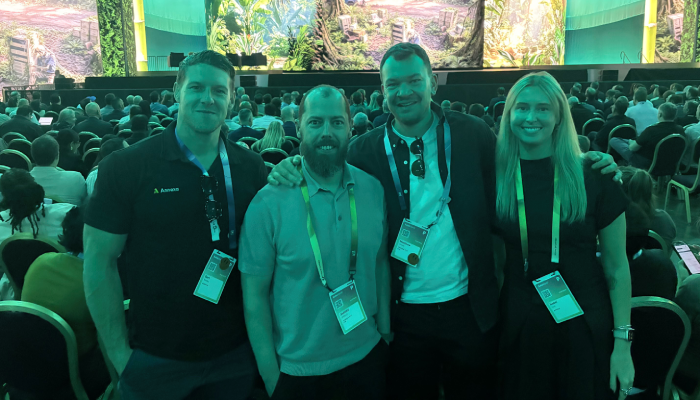
For organisations across Australia and New Zealand, the announcements offer a view of how AI could reshape ERP-driven operations, particularly in financial management, project delivery, inventory and customer service. Annexa, NetSuite’s ANZ Industry Partner of the Year for 2026, attended the keynote to assess the implications for regional businesses.
At the centre of the experience is Ask Oracle, NetSuite’s conversational assistant. Rather than functioning as a standalone chatbot, it works within the ERP environment, allowing users to ask questions about profitability, cash flow, costs and operational performance in natural language. It retrieves relevant information, performs analysis and presents its findings alongside the reports, assumptions and underlying records used to reach a conclusion.
The emphasis is on trust and traceability. AI operates within existing user roles, permissions, reporting structures and business data, allowing employees to review how an answer was generated before acting on it.
NetSuite said more than 15,000 businesses are now using AI across its ecosystem, including Ask Oracle and external AI tools such as Claude and ChatGPT connected through its AI Connector. The company described a progression in adoption: users first seek insights, then recommendations and, once confidence develops, greater automation.
“Autonomy does not mean giving up control. AI must operate within the permissions, processes and approval structures that govern the business.”
From organisational knowledge to AI-driven execution
Another important development is SuiteSkills, which allows organisations to encode their internal processes, approval requirements and best practices into reusable instructions for AI. Demonstrations included employee onboarding, equipment provisioning and procurement, showing how institutional knowledge can be applied consistently without depending on individual employees to remember every step.
SuiteAgents take this further by enabling specialised AI agents to monitor activities, identify risks, recommend actions and prepare or execute routine tasks within defined permissions. The SuiteAgent Management Workspace gives administrators visibility into agent activity, data access and potential interventions, including the ability to disable an agent.
NetSuite also introduced industry-specific agents, AI Portlets, AI Workspaces within NetSuite Next and SuiteExpress for AI-led implementation, extending the autonomous suite across different business functions.
Finance becomes a key use case
Finance emerged as one of the strongest applications. NetSuite’s ‘always be closing’ approach aims to replace the traditional month-end rush with continuous monitoring of reconciliations, exceptions and reporting activities.
Its Intelligent Close workspace brings financial close tasks into a central dashboard, tracking progress, ownership and projected completion dates. Teams can upload an existing close plan from a spreadsheet, with Ask Oracle mapping activities to system tasks, recommending additional steps, assigning owners and setting dependencies.
AI agents can then support bank reconciliations, balance-sheet reviews and exception management throughout the reporting period. NetSuite also cited customer examples where financial close cycles have been reduced from approximately 20 days to two or three.
Beyond finance: Projects and inventory
The keynote demonstrated how agents can support project and inventory management. In one scenario, a project portfolio dashboard identified a high-risk engagement involving an overallocated solution architect and a potentially delayed milestone. Ask Oracle analysed the issue, presented staffing alternatives and completed a reassignment only after the practice director approved it.
Another demonstration involved an inventory optimisation agent monitoring