


The Singapore-based robotics company will invest in AI-driven factory orchestration, robot performance and its Australian expansion as manufacturers seek higher productivity without costly facility redesigns.
Industrial automation is moving beyond the deployment of individual robots towards connected operations in which machines, autonomous mobile robots and enterprise software work as an integrated system. Singapore-headquartered Botsync is seeking to accelerate this transition after raising US$11 million in a funding round led by IvyCap Ventures.
The round also attracted participation from Capital 2B, AppWorks, Iterative, AngelCentral, Genesis Alternate Ventures and angel investor Nalin Advani. The latest investment takes Botsync’s total funding to more than US$20 million, following its Series A extension led by SGInnovate in January 2026.
The capital will support the development of new AI capabilities for SyncOS, the company’s Physical AI platform, with a focus on throughput optimisation, predictive maintenance and operational analytics. Botsync also plans to improve the performance and reliability of its MAG autonomous mobile robot (AMR) range and expand its teams across engineering, project delivery, customer success and sales.
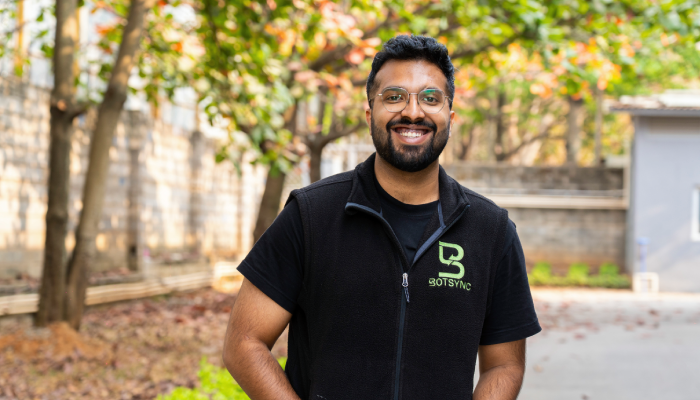
“Automation can no longer be limited to individual robots performing isolated tasks. The real opportunity lies in connecting robots, machines and software systems so that entire facilities operate more efficiently as one.”
— Rahul Nambiar, CEO and Co-Founder, Botsync
A major priority is Australia, where the company has established early traction with new customers and existing global accounts. Its expansion will target fast-moving consumer goods manufacturers, food and beverage production facilities and distribution centres. Botsync is also building its go-to-market presence in the United States while continuing operations across Singapore, India, Thailand and Indonesia.
The Australian opportunity reflects a wider industrial challenge. Rising labour costs, constrained warehouse space and pressure to improve throughput are forcing manufacturers to extract more productivity from existing facilities. Automation that requires extensive infrastructure changes can be expensive and disruptive, making systems that integrate with existing operations increasingly attractive.
Botsync’s SyncOS platform is designed to address this integration challenge. It connects robots, machinery and enterprise systems from different vendors through a common interface, coordinating workflows and material movement across a facility. The platform can manage autonomous mobile robots, robotic arms, collaborative robots, conveyors, automated storage systems and ERP applications.
The company describes this approach as Physical AI: using operational data and AI-enabled orchestration to coordinate physical assets, identify bottlenecks, anticipate problems and improve facility performance. Its MAG robot portfolio includes lifters, conveyors, tuggers and forklifts capable of carrying loads of up to 1.5 tonnes.
Founded in 2019 by graduates of Nanyang Technological University, Botsync has completed more than 70 projects across six countries. The company reports that its systems have performed over two million production tasks with 99% uptime. It also says customers have typically recovered their investment within 24 to 36 months through reduced dependence on forklifts and manual material handling.
“ The added funds give us the opportunity to accelerate that shift and make intelligent, connected operations more accessible and practical for manufacturers to deploy globally,” said Rahul Nambiar, CEO and Co-Founder of Botsync.
Vikram Gupta, Founder and Managing Partner of IvyCap Ventures, said the convergence of robotics, AI and intelligent automation would play a critical role in improving industrial productivity and building more resilient manufacturing operations.
Botsync’s expansion comes as manufacturers reassess how automation investments can deliver measurable returns. Rather than treating robots as standalone equipment, the company is betting on a software-led model in which the orchestration layer connects the entire facility. Its ability to scale that model across industries, geographies and third-party equipment ecosystems will be central to its next phase of growth.