


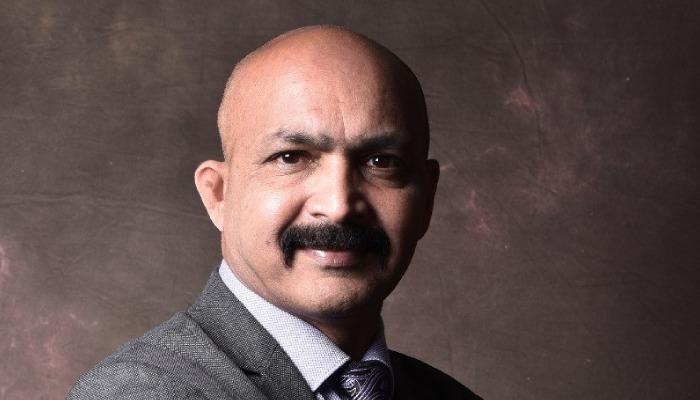
From integrated electronic medical records and AI-led healthcare research to predictive analytics, robotic surgery and cyber resilience, G. Kuppuswamy Naidu Memorial Hospital is building a connected, patient-centric healthcare ecosystem. Biju Velayudhan, Chief Information Officer, explains how technology is reshaping clinical delivery, operational efficiency and patient experience as the 74-year-old institution prepares for its next phase of growth.
Where compassion meets intelligent healthcare
Healthcare is undergoing one of the most significant technological transformations in its history. Artificial intelligence, connected medical devices, predictive analytics, robotics and digital health platforms are changing how hospitals diagnose diseases, manage patients, allocate resources and deliver clinical services. Yet, for healthcare institutions, the real challenge is not simply adopting emerging technologies. It is integrating them into complex clinical environments without compromising patient safety, privacy, trust and continuity of care.
For G. Kuppuswamy Naidu Memorial Hospital (GKNM), Coimbatore, this transformation represents an opportunity to build on more than seven decades of medical excellence and compassionate healthcare delivery. Established in 1952 as a maternity and childcare centre, the institution has evolved into a 750-bed multidisciplinary super-specialty hospital, combining advanced medical capabilities with a strong commitment to community healthcare.
As it approaches a new phase of digital evolution, GKNM is looking beyond conventional hospital automation. Its ambition is to create a digitally connected, AI-enabled and patient-centric healthcare ecosystem in which clinical information, diagnostic systems, operational intelligence and patient engagement platforms work together seamlessly.
At the centre of this journey is Biju Velayudhan, Chief Information Officer at GKNM Hospital, who sees technology not merely as an operational enabler but as a strategic instrument for improving clinical outcomes, strengthening patient safety and transforming healthcare delivery.
The hospital’s digital roadmap encompasses integrated Electronic Medical Records (EMR), artificial intelligence-assisted clinical documentation, intelligent hospital command centres, predictive analytics, workflow automation, telemedicine and smart hospital technologies. A particularly important development is its Centre of Excellence in Healthcare AI, launched in September 2026 in collaboration with IISc Bengaluru and TANUH, focusing on research into earlier detection of breast cancer, diabetes, heart disease and kidney disease.
However, Velayudhan’s approach is measured. While recognising the transformative potential of AI, he emphasises that clinical validation, data integration, cybersecurity, regulatory compliance and organisational readiness must precede large-scale implementation.
His philosophy reflects an important reality for healthcare CIOs: successful digital transformation is not measured by the number of technologies deployed, but by their tangible contribution to patient care.
“Digital transformation is not just a technology project; it is an organisational and cultural transformation.”
Biju Velayudhan, CIO, GKNM Hospital
Building the digitally connected hospital
For GKNM, the next few years will be about moving from individual digital systems towards an integrated healthcare ecosystem.
Hospitals generate enormous volumes of information across clinical departments, laboratories, radiology, pharmacies, patient administration and financial operations. When these systems operate independently, the resulting information silos can slow down clinical decisions, create operational inefficiencies and limit the ability to derive meaningful insights from patient data.
Velayudhan identifies seamless integration of the Hospital Information System (HIS), Electronic Medical Records (EMR), Laboratory Information Management System (LIMS) and Picture Archiving and Communication System (PACS) as a strategic priority.
The objective is to establish a connected information environment in which authorised clinicians can access relevant patient information efficiently, regardless of where it originates within the hospital.
Such integration can improve coordination between departments, accelerate diagnostic turnaround times, support safer medication management and reduce delays in clinical decision-making.
The hospital is also looking at AI-assisted clinical documentation and decision support, intelligent command centres, digital patient engagement and workflow automation.
These initiatives are important because healthcare efficiency is not determined exclusively by clinical expertise. The ability to coordinate appointments, admissions, diagnostics, bed availability, discharge processes and other operational activities has a direct influence on patient experience and hospital productivity.
An intelligent hospital command centre, supported by real-time dashboards and integrated information, can help management monitor operational performance and identify bottlenecks.
The broader objective is to improve resource utilisation, reduce waiting times, optimise costs and provide a more consistent patient experience.
For healthcare CIOs, this signals a shift from managing hospital IT applications independently to orchestrating an integrated digital operating environment.
“A successful healthcare CIO is not measured by the number of technologies implemented, but by the difference those technologies make to patient care and organisational growth.”
Biju Velayudhan, CIO, GKNM Hospital
AI moves healthcare towards predictive and preventive medicine
Artificial intelligence is emerging as one of the most influential technologies in modern healthcare. Its potential extends from medical imaging and clinical documentation to disease prediction, patient engagement and hospital administration.
However, the adoption of AI in clinical environments requires a different level of responsibility compared with its use in conventional business applications.
A clinical AI system must demonstrate reliability, accuracy and relevance before its recommendations can influence medical decisions. It must also work within established clinical workflows and remain subject to appropriate medical oversight.
At GKNM, AI adoption is progressing through research and development, with a focus on strengthening early disease detection and clinical decision-making.
A significant milestone in this direction was the launch of the Centre of Excellence in Healthcare AI in September 2026, in collaboration with IISc Bengaluru and TANUH.
The initiative focuses on research into earlier detection of breast cancer, diabetes, heart disease and kidney disease.
The collaboration is significant because it brings together healthcare expertise and research capabilities to explore how AI can contribute to earlier identification of diseases.
“Our strategic priority is to build a digitally connected, AI-enabled and patient-centric healthcare ecosystem.”
Early detection is particularly important for chronic and lifestyle-related conditions, where timely intervention can influence treatment outcomes and reduce the burden of advanced disease.
Velayudhan clarifies that AI-driven diagnostics are still progressing at GKNM. The current emphasis is on research and developing capabilities that can eventually support doctors with improved diagnostic insights.
This distinction is important. AI should not be viewed as a replacement for clinical expertise, but as a technology that can strengthen the information available to medical professionals.
Beyond diagnostics, AI has considerable potential in patient engagement. Intelligent platforms can support personalised communication, appointment management, follow-up reminders and chronic disease monitoring.
Within hospital operations, AI-assisted documentation, discharge management, patient-flow optimisation and predictive analytics can reduce administrative workloads and improve efficiency.
The long-term ambition is to move towards predictive, preventive and personalised healthcare.
For patients, this could mean earlier identification of health risks, more informed treatment decisions and better continuity of care. For clinicians, it could provide access to relevant insights without adding unnecessary complexity to their workflows.
“The overall vision is to move towards predictive, preventive and personalised healthcare.”
Data analytics: Turning hospital information into clinical intelligence
As healthcare becomes increasingly digital, the ability to convert information into actionable intelligence will become a defining competitive advantage.
Every hospital generates substantial operational and clinical data. However, the real value of this information emerges when it can be analysed across departments and used to support evidence-based decisions.
At GKNM, the integration of HIS, EMR, LIMS, PACS and Business Intelligence tools is expected to strengthen the hospital’s ability to understand clinical outcomes, disease trends, diagnostic turnaround times, patient volumes, bed occupancy, departmental performance and resource utilisation.
This creates two important dimensions of value.
The first is clinical intelligence. Doctors and clinical teams can use relevant patient information and analytical insights to support diagnosis, treatment planning and continuity of care.
The second is business intelligence. Hospital management can use operational and financial information to identify inefficiencies, monitor departmental performance, control costs and improve resource allocation.
For example, analysing bed occupancy and patient-flow patterns can help hospitals understand where operational bottlenecks occur. Diagnostic turnaround-time data can reveal delays in laboratory or radiology processes. Departmental performance indicators can help management identify opportunities for improving productivity.
Predictive analytics can further extend these capabilities by identifying emerging trends and supporting proactive decisions.
The transition from retrospective reporting to real-time and predictive intelligence will become increasingly important as hospitals manage growing patient volumes and increasingly complex clinical operations.
“Patient data confidentiality, system availability and integrity are essential to ensuring uninterrupted delivery of safe healthcare services.”
Velayudhan believes that the combination of integrated digital platforms, AI and analytics will enable GKNM to strengthen both clinical decision-making and organisational performance.
The larger implication is that hospital data must be treated as a strategic asset rather than simply a by-product of digital transactions.
Cybersecurity becomes a patient safety priority
The digital transformation of healthcare also expands the sector’s exposure to cyber threats.
Unlike many other industries, hospitals operate in environments where technology disruptions can have immediate implications for patient safety. An attack that compromises patient records, diagnostic platforms or critical hospital applications can affect not only information confidentiality but also the continuity of medical services.
Ransomware, phishing, unauthorised access, insider threats, legacy system vulnerabilities, third-party risks and connected medical devices are among the major cybersecurity challenges facing healthcare organisations.
For GKNM, cybersecurity is an essential component of its digital strategy.
Velayudhan highlights the importance of an established IT infrastructure, employee awareness and data security practices. The hospital is also strengthening its focus on data privacy and governance in alignment with the Digital Personal Data Protection (DPDP) Act.
One important aspect of its security approach is the recognition that data residing in cloud environments and on-premises infrastructure requires appropriate protection.
The hospital has maintained disaster recovery capabilities for nearly two decades, reflecting its long-standing focus on business continuity and the availability of critical information systems.
This is particularly relevant in healthcare, where the ability to restore clinical applications and information quickly can be critical to maintaining uninterrupted services.
Looking ahead, GKNM’s security priorities include strengthening Zero Trust principles, continuous threat monitoring, multifactor authentication, encryption, vulnerability assessments and regular cybersecurity awareness programmes.
The objective is to ensure confidentiality, integrity and availability of patient information while protecting the hospital’s operational infrastructure.
For healthcare CIOs, this represents a fundamental shift in how cybersecurity should be positioned. It is no longer simply an IT risk-management function. It is an integral part of patient safety, clinical resilience and institutional trust.
The cloud question: Innovation without compromising patient trust
Cloud computing offers hospitals significant advantages, including scalability, flexibility, improved accessibility and cost optimisation. However, healthcare institutions must evaluate these benefits against the sensitivity of patient information and regulatory requirements.
GKNM follows a cautious and selective approach to cloud adoption.
Rather than moving all hospital applications and information into cloud environments, the institution is evaluating specific workloads where cloud technology can provide operational advantages without compromising data security and control.
Potential areas include data backup and disaster recovery, secure data archiving, non-critical applications, collaboration platforms and selected analytics workloads.
Critical clinical applications and sensitive patient information will continue to receive particular attention in terms of control, security and deployment decisions.
The hospital’s preferred direction is a hybrid cloud strategy supported by encryption, access controls, security monitoring and compliance with the DPDP Act.
This approach reflects the growing importance of workload-based cloud decisions in regulated industries.
For CIOs, cloud adoption should not be treated as a binary decision between public cloud and on-premises infrastructure. Different applications have different requirements relating to latency, availability, confidentiality, integration and regulatory compliance.
A hybrid model allows organisations to evaluate each workload according to its business and security requirements.
In healthcare, where system availability and patient data protection are non-negotiable, such a measured strategy can help balance innovation with operational resilience.
The next five years: AI, robotics, IoT and precision medicine
The healthcare technology landscape is evolving rapidly, and the next five years could see the convergence of several emerging technologies.
Velayudhan identifies Artificial Intelligence, Generative AI, Agentic AI, predictive analytics, robotics, Internet of Things-enabled patient monitoring, precision medicine, digital twins and advanced healthcare interoperability as technologies likely to have a significant impact.
AI and Generative AI can improve clinical documentation, support decision-making and make complex medical information more accessible.
Agentic AI could take this further by automating multi-step administrative and clinical workflows, subject to appropriate permissions and human oversight.
Connected medical devices and wearable technologies can support continuous monitoring beyond hospital boundaries. This is particularly relevant for patients with chronic conditions who require regular monitoring and follow-up.
Remote patient monitoring and telemedicine can help extend healthcare services to patients who may face geographical or mobility-related challenges.
Robotic-assisted surgery is another important area of innovation. GKNM already supports advanced surgical capabilities, including the Da Vinci Robotic Surgery System, demonstrating the institution’s engagement with advanced medical technology.
In the coming years, predictive analytics and digital twins could help hospitals model operational scenarios, improve resource utilisation and support more personalised treatment planning.
However, Velayudhan believes that adoption must be progressive and supported by strong data integration, cybersecurity and clinical governance.
This is a significant point for healthcare leaders. The availability of technology does not automatically make its adoption appropriate. Its value must be assessed against clinical relevance, implementation readiness, cost and measurable outcomes.
Balancing innovation with regulation and privacy
Healthcare institutions manage some of the most sensitive categories of personal information. Consequently, innovation must be accompanied by strong governance and accountability.
For GKNM, patient safety, privacy and data security remain non-negotiable considerations.
Velayudhan emphasises that new technologies, particularly AI, cloud computing and digital health applications, should undergo appropriate security assessments, privacy impact assessments, clinical validation and regulatory review before implementation.
The hospital is also strengthening its focus on vendor accountability, employee awareness, regular security audits and DPDP Act compliance.
This approach is important because digital healthcare ecosystems increasingly involve multiple technology providers, cloud platforms, application developers and connected medical devices.
Every additional integration introduces potential security and privacy considerations.
A security-by-design and privacy-by-design philosophy can help ensure that these requirements are addressed at the planning stage rather than after deployment.
For AI initiatives, clinical governance is equally important. Models must be evaluated for their suitability, accuracy and relevance, and their outputs must be interpreted within the context of medical expertise.
The objective is to create an environment where innovation and compliance reinforce each other rather than operate as competing priorities.
The human side of digital transformation
One of the most important insights from Velayudhan’s experience is that healthcare digital transformation is fundamentally about people.
Technology implementation in a hospital is particularly complex because it affects multiple stakeholders with different operational priorities.
Doctors require timely and accurate clinical information. Nurses need dependable workflows and access to patient records. Administrative teams focus on admissions, billing and coordination. Hospital management requires operational visibility and financial intelligence.
A digital initiative that fails to address the actual needs of these stakeholders may struggle to achieve adoption, regardless of its technical sophistication.
Velayudhan believes that strong leadership, a clearly defined digital vision and active involvement of doctors and clinical teams are essential for success.
He also stresses the importance of integrating existing systems, standardising data, strengthening interoperability and ensuring cybersecurity before scaling AI and advanced analytics.
Phased implementation, employee training, change management, vendor accountability and measurable return on investment are equally important.
This perspective challenges the common perception that digital transformation is primarily a technology procurement exercise.
For a hospital CIO, understanding clinical workflows and patient expectations is just as important as understanding infrastructure, applications and emerging technology.
The most effective digital initiatives are those that solve real operational and clinical problems.
GKNM: Seven decades of healthcare excellence, preparing for tomorrow
The digital transformation journey at GKNM must be viewed against the institution’s broader history of medical excellence and community service.
Founded in 1952 under the vision of philanthropist G. Kuppuswamy Naidu and guided by the Kuppuswamy Naidu Charity Trust for Education and Medical Relief, the hospital has evolved into a major multidisciplinary healthcare institution in Coimbatore.
Today, its 750-bed facility offers a wide range of specialised medical services, supported by advanced diagnostics and surgical capabilities.
One of its significant recent milestones is the GKNM Integrated Out-Patient Centre (GKNM iOP), recognised by the Asia Book of Records as Asia’s Largest Integrated Out-Patient Centre.
The facility brings together more than 30 medical departments and over 300 doctors, alongside advanced diagnostic services and same-day surgical facilities. It also reflects a holistic approach to healthcare through offerings such as Yoga, Naturopathy and Acupuncture.
The hospital’s clinical achievements extend across several specialities.
Its cancer centre has benefited nearly two lakh patients through its services and research facilities. The institution has facilitated more than 1.5 lakh childbirths and established a strong presence in cardiac sciences, with over 1,50,000 cath lab procedures and 50,000 cardiac surgeries.
It has also achieved the distinction of performing Tamil Nadu’s first heart transplant under the Chief Minister’s Comprehensive Health Insurance Scheme.
In neurological care, GKNM is recognised as an Advanced Stroke Centre, offering rapid CT and MRI services, round-the-clock expert stroke care and integrated rehabilitation facilities.
The institution’s technological capabilities include the Da Vinci Robotic Surgery System, while its Home Healthcare Programme extends professional medical services to patients beyond hospital premises.
Equally important is its commitment to community healthcare.
Through its Rural Health Centre in Veerapandi, GKNM provides free medical consultations and medicines to underserved communities. Raksha – The Hospice in Sengadu offers palliative care to critically ill and terminally ill patients.
Its community cancer screening initiatives have screened more than 30,000 women, while free HPV vaccination has been provided to 1,800 girl children. The hospital also supports free cancer treatment for needy women and comprehensive care for children diagnosed with childhood cancers through charitable and CSR-supported programmes.
These initiatives underline the institution’s philosophy of combining advanced medical capabilities with accessibility and compassion.
As GKNM celebrates 74 years of service, its digital ambitions are an extension of this larger institutional commitment.
Technology is expected to strengthen the delivery model, improve access to information, support earlier diagnosis and enable more efficient healthcare operations.
A message to the next generation of healthcare CIOs
For aspiring CIOs, Velayudhan’s advice is straightforward: think beyond technology.
Healthcare CIOs must understand clinical workflows, hospital operations and patient expectations before recommending technology investments.
Building relationships with doctors, nurses and hospital management is essential because successful digital transformation depends on people and organisational acceptance.
He also advises emerging technology leaders to develop financial acumen, strategic thinking, communication and change-management capabilities.
Integrating existing systems, strengthening cybersecurity, protecting patient information and using AI and analytics to achieve measurable improvements should remain central priorities.
His most important message is that technology should never be implemented simply because it is available. It should be adopted because it addresses a genuine healthcare challenge.
Conclusion: The future of healthcare is connected, intelligent and compassionate
The future of healthcare will be shaped by the convergence of clinical expertise, digital infrastructure, artificial intelligence and data-driven decision-making.
For GKNM Hospital, the journey towards 2030 is about creating a healthcare ecosystem that combines the institution’s legacy of compassionate care with the capabilities of a modern digital hospital.
Integrated information systems will provide the foundation. AI research and predictive analytics will create opportunities for earlier detection and more informed decisions. Cloud and connected technologies will offer new possibilities for scalability and continuity, while cybersecurity and data governance will protect the trust on which healthcare institutions depend.
But the defining measure of success will remain the patient.
Whether it is reducing waiting times, improving diagnostic turnaround, enabling earlier disease detection, strengthening clinical coordination or extending care into patients’ homes, every technology investment must ultimately contribute to better healthcare delivery.
The transformation also offers a broader lesson for India’s healthcare industry. As hospitals accelerate digital adoption, the next competitive advantage will not come simply from possessing advanced technology. It will come from integrating that technology into clinical practice, building organisational trust and ensuring that innovation delivers measurable outcomes.
At GKNM, the ambition is to ensure that 74 years of healthcare legacy become the foundation for a more intelligent, connected and patient-centric future.
The future hospital will be powered by technology, but its purpose will remain profoundly human.