


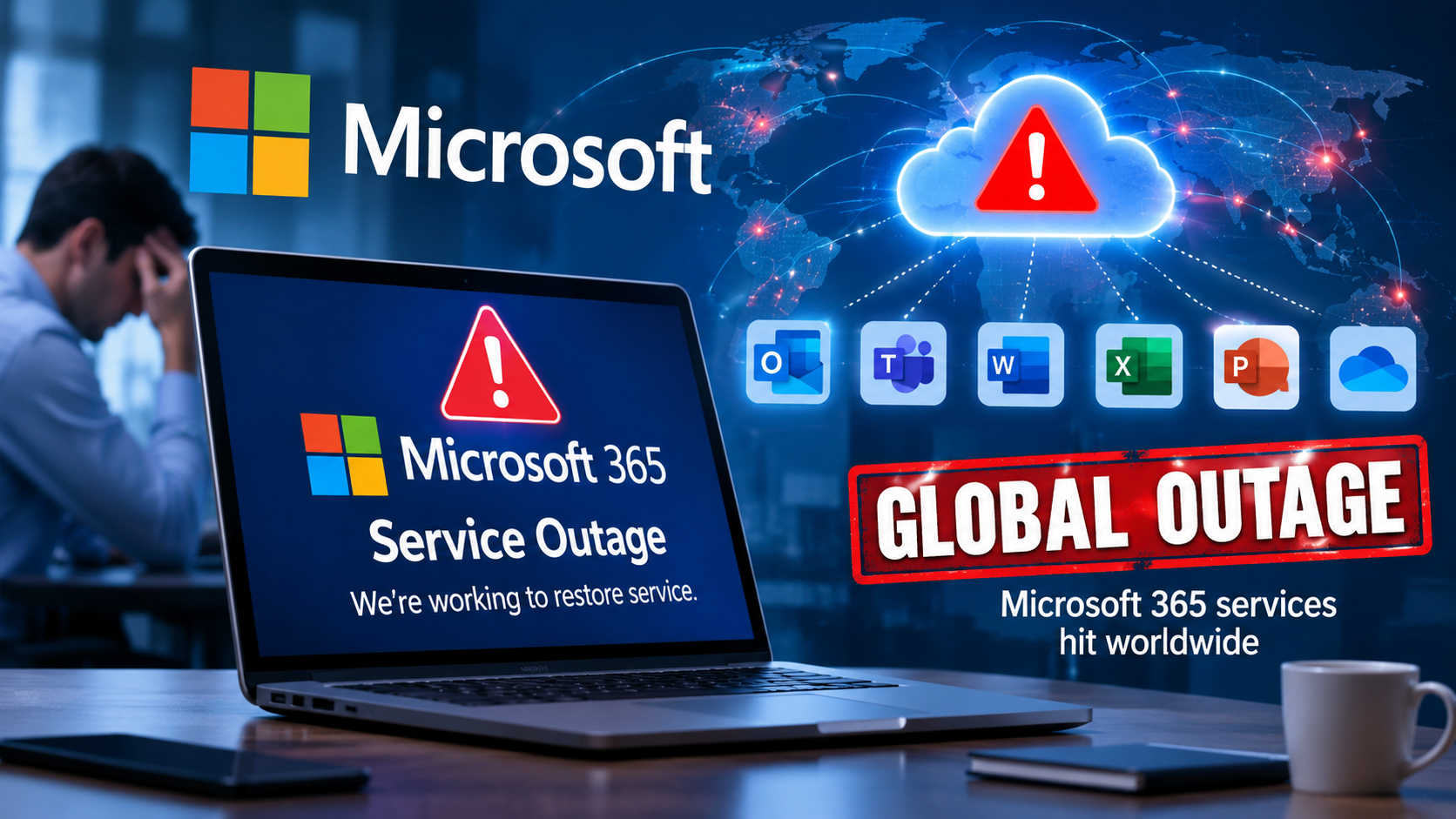
Global disruption to Outlook, Teams and other Microsoft services highlights the growing risks of concentrated cloud infrastructure and the need for stronger business continuity strategies.
A widespread Microsoft 365 outage on November 12–13 has disrupted business operations across multiple regions, leaving thousands of users struggling to access Outlook, Exchange Online, Teams and other essential enterprise services. The disruption has exposed how deeply businesses depend on a handful of cloud platforms to sustain everyday operations.
Microsoft attributed the incident to elevated infrastructure loads and unexpected server failures across multiple regions. Its investigation found that a core process on affected servers was becoming overwhelmed, causing them to stop responding and reducing available service capacity. The company has been redirecting traffic, restarting affected servers and testing earlier software configurations to restore stability.
The impact extends beyond email. Microsoft identified disruptions affecting SharePoint, Copilot, Planner, To Do, Defender, Purview and other Microsoft 365 services. Several Teams functions dependent on Exchange Online were also affected, although core messaging and online meetings remained largely operational.
For CIOs, the incident raises a fundamental question: how resilient are enterprise operations when critical business workflows depend on a single cloud ecosystem? Cloud availability is no longer simply an IT infrastructure concern; it directly influences productivity, customer engagement, security operations and business continuity.
While Microsoft works towards full recovery, the outage reinforces the importance of independent backup communication channels, tested disaster recovery plans, alternative collaboration platforms and clearly defined service continuity procedures.
The lesson is clear: cloud-first strategies must also be resilience-first. Enterprise agility depends not just on adopting cloud platforms, but on preparing for the possibility that even the world’s largest technology providers can experience service disruptions.